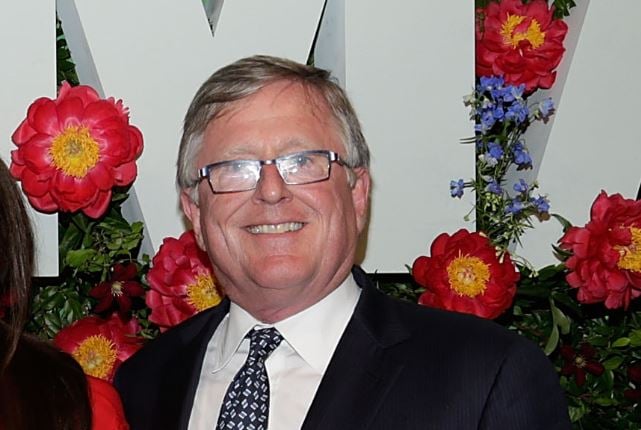
David Booth Net Worth 2025: Unpacking the Billion-Dollar Discrepancy
David Booth, a name synonymous with shrewd investment strategies and transformative philanthropy, continues to capture significant attention within the financial world. As a titan of the investment management industry, his career trajectory from a meticulous auditor to the co-founder of a multi-billion-dollar firm is a testament to his vision and disciplined approach. In 2025, the curiosity surrounding David Booth's net worth is palpable, with various estimates placing his colossal wealth anywhere from $1.3 billion to a staggering $3 billion. This wide range sparks a natural question: why such a significant disparity?
This article delves into the financial landscape of David Booth, exploring the foundations of his immense wealth, his pivotal role in creating one of the world's most respected investment firms, and his profound impact through generous philanthropic endeavors. We'll also dissect the potential reasons behind the differing valuations, providing a comprehensive look at what contributes to the fortune of this influential entrepreneur and investor.
The Billion-Dollar Question: Why David Booth's Net Worth Estimates Vary So Wildly
When examining the financial profiles of high-net-worth individuals, particularly those whose primary assets are tied to privately held companies, it's common to encounter a range of figures. In the case of David Booth, some sources, like Forbes, estimate his net worth around $1.3 billion in 2025, while others suggest it could be as high as $3 billion. This considerable difference isn't necessarily a sign of inaccuracy but rather a reflection of several factors inherent in wealth estimation:
- Private Company Valuation Challenges: Dimensional Fund Advisors (DFA), the cornerstone of Booth's wealth, is a privately held company. Unlike publicly traded firms with readily available stock prices, valuing a private entity requires intricate financial modeling. Different analysts might use varying methodologies, such as multiples of assets under management (AUM), earnings (EBITDA), or revenue, each yielding different outcomes. The specific discount rates applied, or even the chosen comparable companies, can significantly swing the final valuation.
- Reporting Timelines and Market Dynamics: Financial estimates are snapshots in time. A valuation conducted in late 2024 for a 2025 projection might differ significantly from one made mid-2025, especially in volatile market conditions. DFA's AUM, performance, and overall market sentiment could shift, impacting its perceived value and, consequently, Booth's stake.
- Scope of Assets Included: Wealth estimates often vary based on what assets are factored in. While Booth's stake in DFA is undoubtedly the largest component, he also holds significant real estate, art investments, and other ventures. Some estimations might be more conservative, focusing primarily on liquid assets and publicly known holdings, while others might attempt to include a broader, less transparent portfolio.
- Impact of Philanthropic Pledges: Booth is a signatory of the Giving Pledge, vowing to donate at least half of his wealth. The timing and accounting of such substantial pledges can influence current net worth calculations. Is the pledged amount immediately deducted from the estimated wealth, or is it accounted for as it is actually distributed over time? These accounting differences can lead to different reported figures.
Despite the range, both figures unequivocally place David Booth among the elite ranks of billionaires, underscoring the monumental success he has achieved throughout his illustrious career.
From Accounting to Investment Titan: The Genesis of Booth's Wealth
David Booth's journey to becoming a prominent figure in the investment world wasn't an overnight phenomenon. Born and raised in Kansas, his early academic pursuits at the University of Kansas culminated in an accounting degree. This foundational knowledge proved invaluable, as he began his career as an auditor for Arthur Andersen. It was here that he honed critical analytical skills and developed a meticulous eye for detail, attributes that would later define his investment philosophy.
The late 1970s and early 1980s marked a pivotal turning point. Influenced by investment legends like Benjamin Graham and Warren Buffett, Booth developed a disciplined approach to value investing. This conviction led him to take a significant leap of faith, eventually leading to the co-founding of Dimensional Fund Advisors in 1981. This entrepreneurial spirit, combined with a rigorous, evidence-based investment methodology, laid the groundwork for an empire. To learn more about his early career and the foundation of his investment philosophy, explore From Auditor to Billionaire: David Booth's DFA Investment Empire.
Dimensional Fund Advisors: The Cornerstone of a Fortune
The primary engine driving David Booth's net worth 2 is undoubtedly Dimensional Fund Advisors (DFA). Co-founded in 1981, DFA was conceived with a revolutionary idea: to bridge the gap between academic finance research and practical investment management. Unlike traditional active managers who attempt to beat the market through stock picking, DFA adopted a "factor investing" approach, systematically targeting dimensions of expected returns identified by rigorous academic studies, such as value and small cap premiums.
Under Booth's leadership, initially as Chairman and CEO and later as Executive Chairman, DFA blossomed into one of the world's most respected and successful investment management firms. By 2021, the firm managed an astounding $600 billion in assets, solidifying its position as a global leader. This exponential growth in assets under management (AUM) directly translates to substantial revenue for the firm, of which Booth, as a significant co-founder and shareholder, has a substantial stake. His role involved not only strategic direction but also fostering a culture of academic rigor and client-centric service that set DFA apart.
Beyond his entrepreneurial success, Booth's academic credentials further underscore his influence. He has taught at the University of Chicago's Graduate School of Business, where his insights have shaped countless future financial professionals. His unique blend of academic theory and practical application has been instrumental in DFA's enduring success, making it a critical component of his wealth accumulation.
Philanthropy and Legacy: Beyond the Balance Sheet
While David Booth's net worth 2 is impressive, his commitment to giving back is equally significant. In 2018, he joined the Giving Pledge, a global movement of philanthropists committed to donating the majority of their wealth to charitable causes. This vow highlights a profound dedication to leveraging his fortune for societal benefit.
His philanthropic efforts have left an indelible mark on several institutions, most notably the University of Kansas and the University of Chicago. In a truly monumental gesture, Booth pledged $300 million to the University of Kansas, his alma mater. Announced in August, this donation stands as the largest in the university's history and ranks among the most substantial gifts ever recorded in college athletics. This generosity will be visibly celebrated with the unveiling of the newly renovated David Booth Kansas Memorial Stadium as the 2025 football season kicks off.
Beyond Kansas, Booth's influence extends to the University of Chicago Booth School of Business, which bears his name—a testament to his significant contributions and involvement. His donations to these institutions not only provide critical funding for education, research, and athletic programs but also inspire future generations of leaders and philanthropists. His legacy is clearly multifaceted, extending far beyond financial figures. For a deeper dive into his charitable contributions, read David Booth's Billion-Dollar Legacy: Philanthropy and Net Worth.
Diversified Assets and Income Streams
While his substantial stake in Dimensional Fund Advisors forms the bedrock of David Booth's wealth, his financial portfolio extends to various other assets and income streams. These include:
- Real Estate Holdings: Booth owns a luxurious home in Chicago, Illinois, among other potential property investments, diversifying his asset base beyond financial markets.
- Art Investments: He is known to invest in art, a common strategy among high-net-worth individuals to preserve and grow wealth while indulging in personal passions.
- Other Investment Ventures: Beyond DFA, Booth has likely engaged in various other private equity, venture capital, or direct investments, though details are not publicly disclosed.
While his exact annual income is not publicly disclosed, it's estimated to be in the tens of millions of dollars, primarily derived from his leadership role and ownership stake in DFA. This consistent income stream, combined with strategic asset growth, contributes to the ongoing expansion of his overall net worth.
Conclusion
David Booth's net worth in 2025, whether estimated at $1.3 billion or $3 billion, represents an extraordinary accumulation of wealth earned through a combination of visionary entrepreneurship, disciplined investment philosophy, and unwavering commitment to academic rigor. His journey from an auditor to the co-founder of a global investment powerhouse is a remarkable narrative of success. Beyond the financial figures, Booth's profound impact on the financial industry, coupled with his transformative philanthropic endeavors, solidifies his legacy as a leader who not only built immense wealth but also dedicated a significant portion of it to shaping a better future for education and society. His story serves as a powerful reminder that true wealth often extends far beyond a balance sheet, encompassing lasting influence and impactful generosity.
